

What is available
Answers has read-only access to your firm’s Practice CS data:- Time and expenses: billable and non-billable hours, expense entries, rates, amounts
- Clients and engagements: client details, engagement types, project hierarchies
- Staff and departments: employee information, department assignments, roles
- Billing: invoice history, billing decisions, revenue figures
- Projects and tasks: project tracking, task assignments, budgets, scheduling
Access uses read-only credentials. Answers cannot modify any record in Practice CS.
How it works
Answers writes and runs a query against a replica of your Practice CS data, reads the real result, and tells you what it found. You will see an Analyzing section while it works. This is why the answers are not limited to a fixed set of reports. “Billable hours by department” is a report. “Which recurring engagements have been running 20% over budget for three years, and what do the time entry comments say about why” is a question, and Answers can write the query for it. Your firm’s credentials are managed at the firm level, so multiple authorized connectors can share them, and Denari support can administer access without anyone sharing a password.Starting points
Straightforward lookups
- What were our total billable hours last quarter?
- Show me revenue by department for the past 6 months.
- How many hours has the Tax department billed to Hartley Manufacturing this year?
- What is the breakdown of billable vs non-billable time this year?
- Pull up a summary of Brightline Logistics and their recent activity.
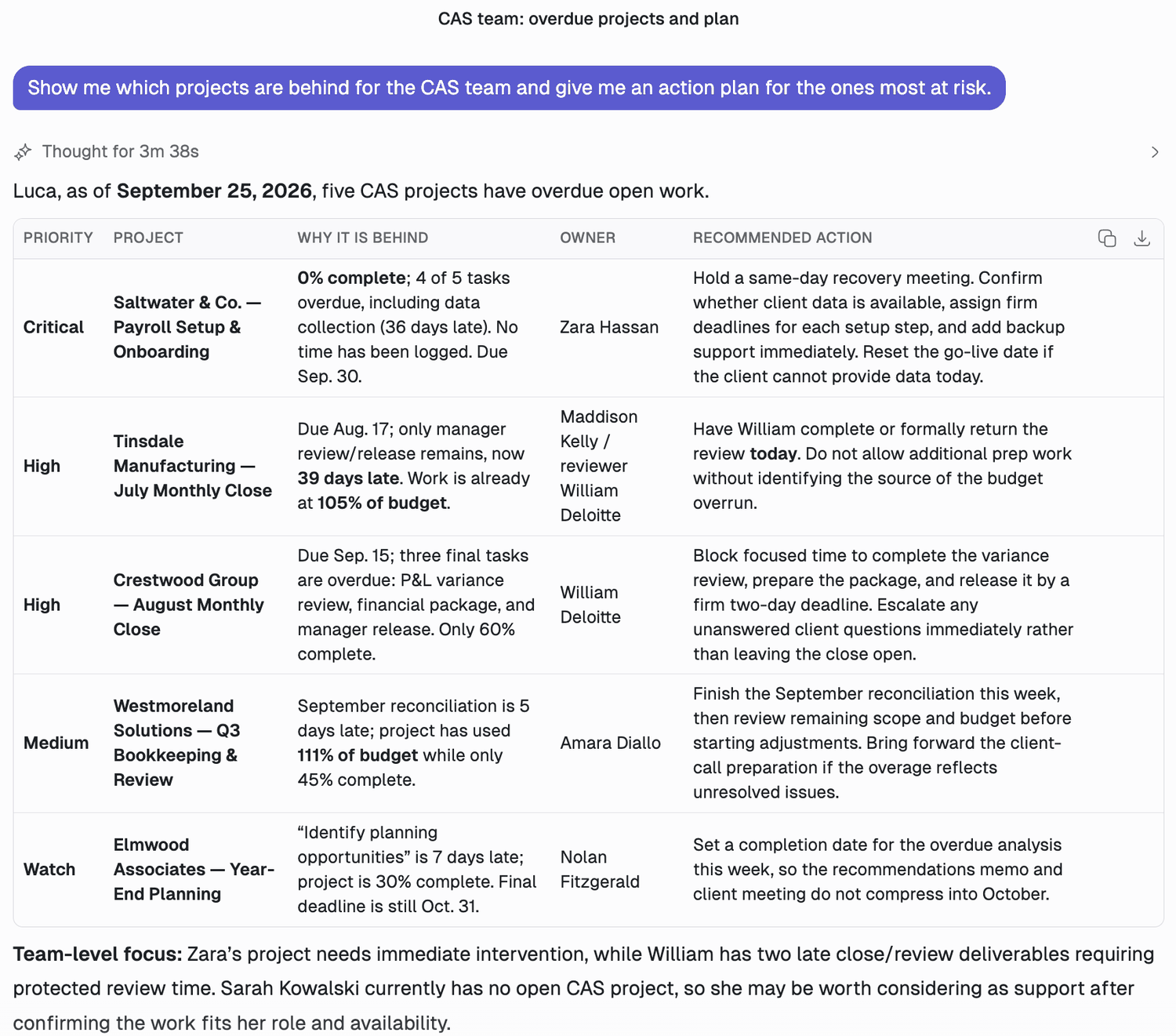
Questions a report will not answer
- Which staff are above or below their billable hour targets, and which way are they trending?
- Compare cost rates against billing rates to show profit by employee and by project.
- Forecast weekly cash flow based on each client’s historical payment patterns.
- Who has more budgeted hours in the next three months than they have capacity for?
- Which clients joined and which left this year, and what is the net revenue effect?
- Quantify hours lost from departed staff and how much new hires have offset it.
Work that produces a deliverable
- Generate the quarterly commission report as a spreadsheet.
- Pull historical data for each metric in our bonus plan and show what it would have paid out in prior years.
- Build the tax season pipeline report: received, at risk of extension, and outstanding hours, compared to the same point last year.
Related skills
Several Denari-provided skills build on Practice CS and are worth picking deliberately:Combining it with other sources
The most valuable Practice CS questions usually are not only about Practice CS.- With QuickBooks Online: pull the client’s address from Practice CS and the period figures from QuickBooks to produce a monthly cover letter.
- With the web: compare your utilization and realization against published industry benchmarks.
- With Denari Documents: cross-reference what you billed against what the engagement letter said you would do.